
Shifting Leadership Paradigm in Times of Uncertainty


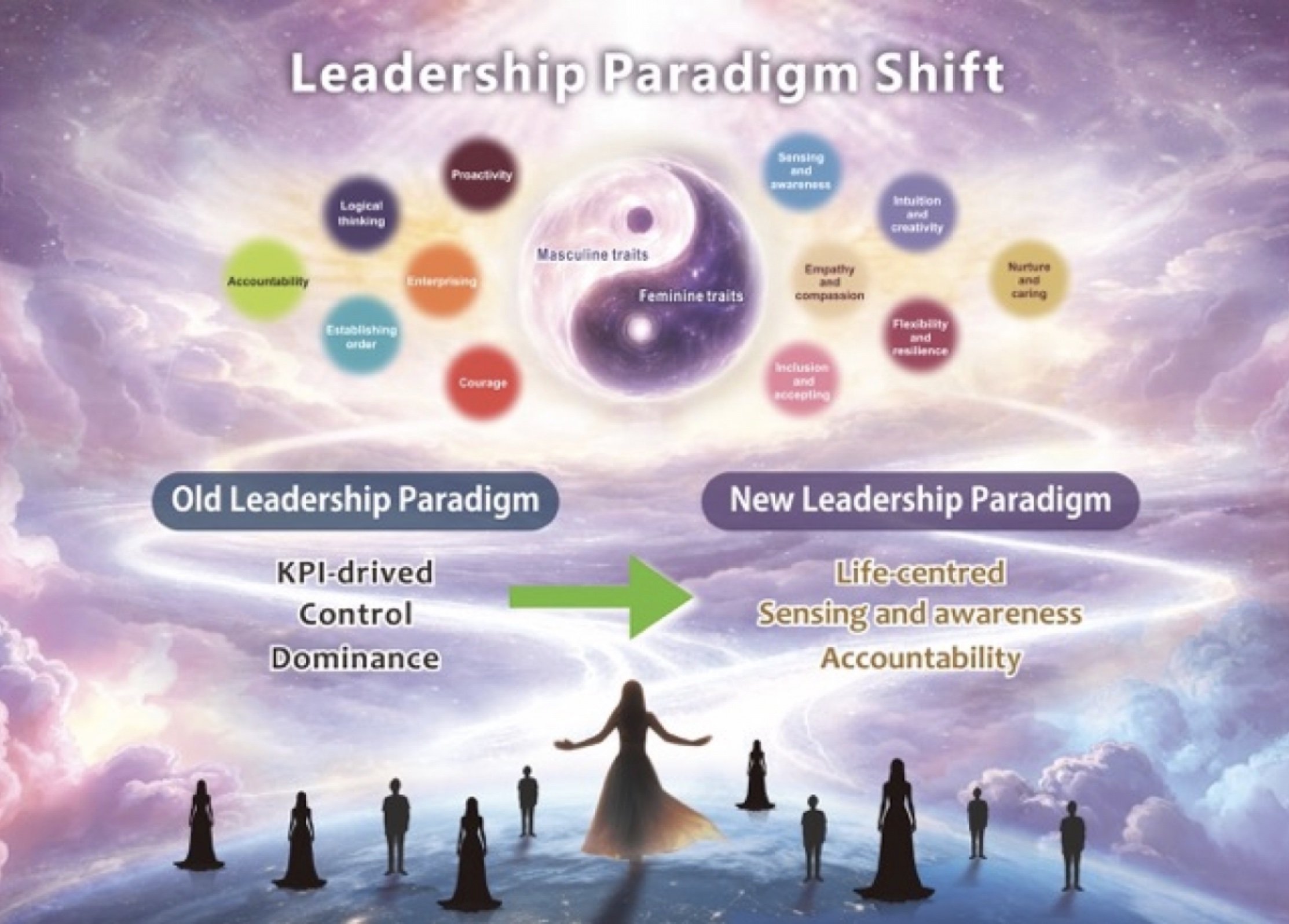
In an era of uncertainty, traditional leadership models are in urgent need of transformation. This article explores how to enhance awareness through Inner Development Goals (IDG), shifting from a mindset of "control" toward a "living systems" perspective. By establishing a leadership paradigm centered on relationships, we can guide organizations to weave a new order amidst turbulence, achieving a balanced and sustainable systemic transformation.
We often speak about gender equity in terms of representation: How many women are in the room, in leadership, in science and technology. These are important but they do not change how systems actually work, especially complex adaptive systems.
The challenges we face today: Climate challenges, social fragmentation, rapid technological change are not only external problems. They reflect deeper imbalances in how we think, relate, and act within the systems we are part of.
For a long time, many systems have been shaped by a strong focus on control, efficiency, competition, and certainty. These qualities are necessary. When they dominate without balance, they create disconnection: from consequences, from relationships, and from the living systems we depend on.
This is where the idea of balance, often described as Yin and Yang, becomes real and relevant. Not as a concept, but as something we practise in how we work, decide, and lead.
From Technical Solutions to Living Systems
In global initiatives such as IEEE Planet Positive 2030, there is a growing recognition that technology alone cannot solve the challenges we face.
Planet Positive 2030 brings together people across science, engineering, arts, culture, and policy to respond to global challenges that are not only innovative, but also responsible and regenerative. It reflects a shift: from focusing only on solutions to understanding the systems those solutions are part of.
Many of today’s challenges are not only technical. They are living system challenges. And living systems require a different way of working.
Working in complex systems goes beyond technical analysis. It requires paying attention to what is unfolding, adapting as things change, and working collectively rather than relying on individual expertise alone.
This is where many efforts struggle. Not due to a lack of knowledge or innovation, but due to the difficulty of working across differences, uncertainty, and competing pressures.
This is where balance becomes real and practical.
The Inner Dimension of System Change
The Inner Development Goals (IDG) bring attention to something often missing in large-scale change: the inner capacity needed to work with complexity.
We can have strong strategies, policies, and technologies. Nonetheless, if we do not have the capacity to:
- Listen across differences
- Stay with tension without reacting
- Work with uncertainty
- Build trust and shared understanding
then change does not take root.
Inner development is not only personal. It shapes how we make decisions, how we hold power, and how we act in systems, especially under pressure.
From my experience, the challenge is not a lack of strategy or intelligence or resources. It lies in how people show up when things are unclear, when there is disagreement, or when there is pressure to act quickly.
In essence, the human and relational dimension is not given enough attention. In many systems, these capacities are assumed, but not developed. Without this inner capacity, even well-designed initiatives struggle to move forward.
Shifting Leadership by Changing Systems
The question is not only who leads, but how leadership is shaped.
Across many systems, leadership appears to be associated with control, dominance, and the ability to drive results. These patterns have become normal over time, less about individuals intending harm, and more reinforced through incentives, structures, and expectations. The systems themselves reward disconnection: from consequences, from relationships, and from life itself. As a result, power can operate with limited awareness of its impact. Decisions can be made at a distance from the people and systems they affect.
Therefore, the question is not only about representation. It is about changing how power works within the system. This is where change is needed.
At this moment, women stepping into leadership can play an important role in shifting these patterns. Not by taking over the same model, but by changing how leadership is practised. It is also not because women are inherently different or better but many have not been as deeply shaped by these dominant patterns. In many cases, women bring ways of relating that remain more connected - to context, to people, and to life, This often shows up in how women:
- Pay attention to relationships, not only outcomes
- Sense what is happening in context, not only following plans
- Recognise interdependence, rather than acting in isolation
These are not additional skills. They change how leadership works.
This creates the possibility to shift leadership from:
- Control towards relational accountability
- Dominance towards sensing and awareness
- Drive results towards outcomes informed through interdependence and life-centred decision making
This is not about replacing one group with another. It is about changing what leadership itself means. The invitation is not for women to step into existing systems as they are, but to help reshape them so that power is held with greater awareness, responsibility, and connection.
Gender equity, in this sense, is not only about inclusion. It is about expanding the range of ways leadership can be understood and practised.
Working in the In-Between
Most of my work takes place in what I call the in-between space. It is where old ways are no longer working, and new ones have not yet taken shape. Where there is no clear structure, no shared language, and often no agreement on what could happen next.
In these spaces, balance is not theoretical. It is lived. It shows up in small but critical moments:
- When to act, and when to pause
- When to hold direction, and when to adapt
- When to bring structure, and when to leave space
I often describe this work as weaving and wayfinding.
Weaving is about connecting what is separate - people, ideas, efforts, across sectors, roles, perspectives, and time - so something more coherent can take shape.
Wayfinding is about moving forward with a clear sense of direction, guided by an inner compass, while staying open to what emerges, one step at a time.
Both require staying with uncertainty, and not rushing to resolve what is not yet ready to be resolved.
Balance as Practice
The balance between feminine and masculine is not something we arrive at and hold. It shifts depending on the situation, the people involved, and what the system is asking for.
In practice, this can look like holding direction while staying open to change. Bringing structure, while allowing space for what is not yet clear. Acting when needed, and pausing when action would close down something important.
The tension between these is not a problem to solve. It is something to work with.
In many systems, there is pressure to move quickly, to decide early, or to reduce complexity into something manageable. Yet what is needed is often the ability to stay with what is not yet resolved. This is not always comfortable. It requires judgement, awareness, and the ability to sense what is needed in the moment.
It is often in this space, where things are not fully clear, that new possibilities begin to emerge.
Working Differently, Together
We are not only being asked to solve problems. The deeper shift is in how we work: How we relate, how we decide, and how we act, especially in complex and changing systems.
In many situations, people are working across differences - different disciplines, cultures, priorities, and expectations. There is often no shared starting point, and no single way forward.
Working together in these conditions is not straightforward. It requires listening without immediate agreement, moving without full clarity, and making decisions while knowing the full picture is not yet visible. It also requires recognising that no single perspective is enough. What matters is how different perspectives are brought into relationship, and how they can move together without forcing alignment too early.
This is where working with both feminine and masculine qualities becomes practical. Not as categories, but as ways of responding: Knowing when to bring clarity, when to stay open, when to act, and when to wait.
This is learned over time, through experience. There is no clear method for this. It is worked out in real time, through how people engage, respond, decide, and move forward together.
It is shaped in how we work together, moment to moment.
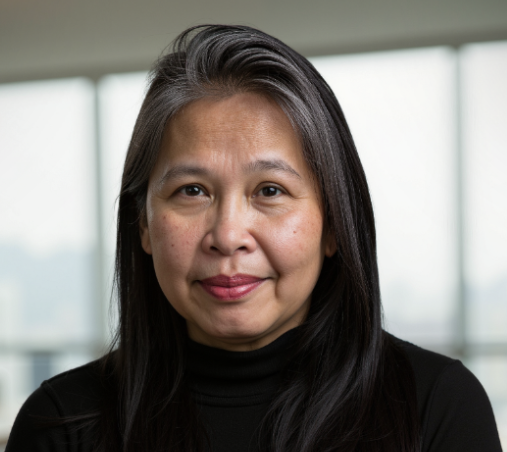
Mila Aliana is the Chief Weaver of IEEE Planet Positive 2030, an initiative supported by the IEEE Standards Association, and the Directory Board Member of Inner Development Goals (IDG). She has been a systems practitioner working at the intersection of complex systems, inner development, and real-world change.
She does not come from a traditional academic or expert path. Her work is grounded in lived experience: working inside complex, multi-stakeholder environments where there is no clear path, no stable structure, and many people trying to move forward together.
She often describes her role as weaving and wayfinding. Weaving means connecting people, ideas, and efforts that are often separate - across sectors, roles, perspectives, and time - linking past experience, present realities, and future possibilities so something more coherent can take shape. Wayfinding means moving forward without a fixed map, guided by a clear inner compass and sense of direction. It is about sensing what is happening, noticing patterns, and taking the next step, staying true to the vision while navigating uncertainty, setbacks, and constant change, one adaptive action at a time.
She has held several senior leadership and board roles, working with coalitions that bring together people with real influence, across policy, governance, business, technology, finance, and science, to shift how systems operate, change, and evolve in practice.
She draws from both modern systems thinking and ancestral ways of knowing, holding them together while respecting the integrity of each.
The heart of her work is shaped through direct engagement in complexity: working in uncharted territory, navigating uncertainty without clear answers, staying with difficulty without collapsing or rushing to solutions, and co-creating spaces and interactions that allow people and systems to find their own way forward.


