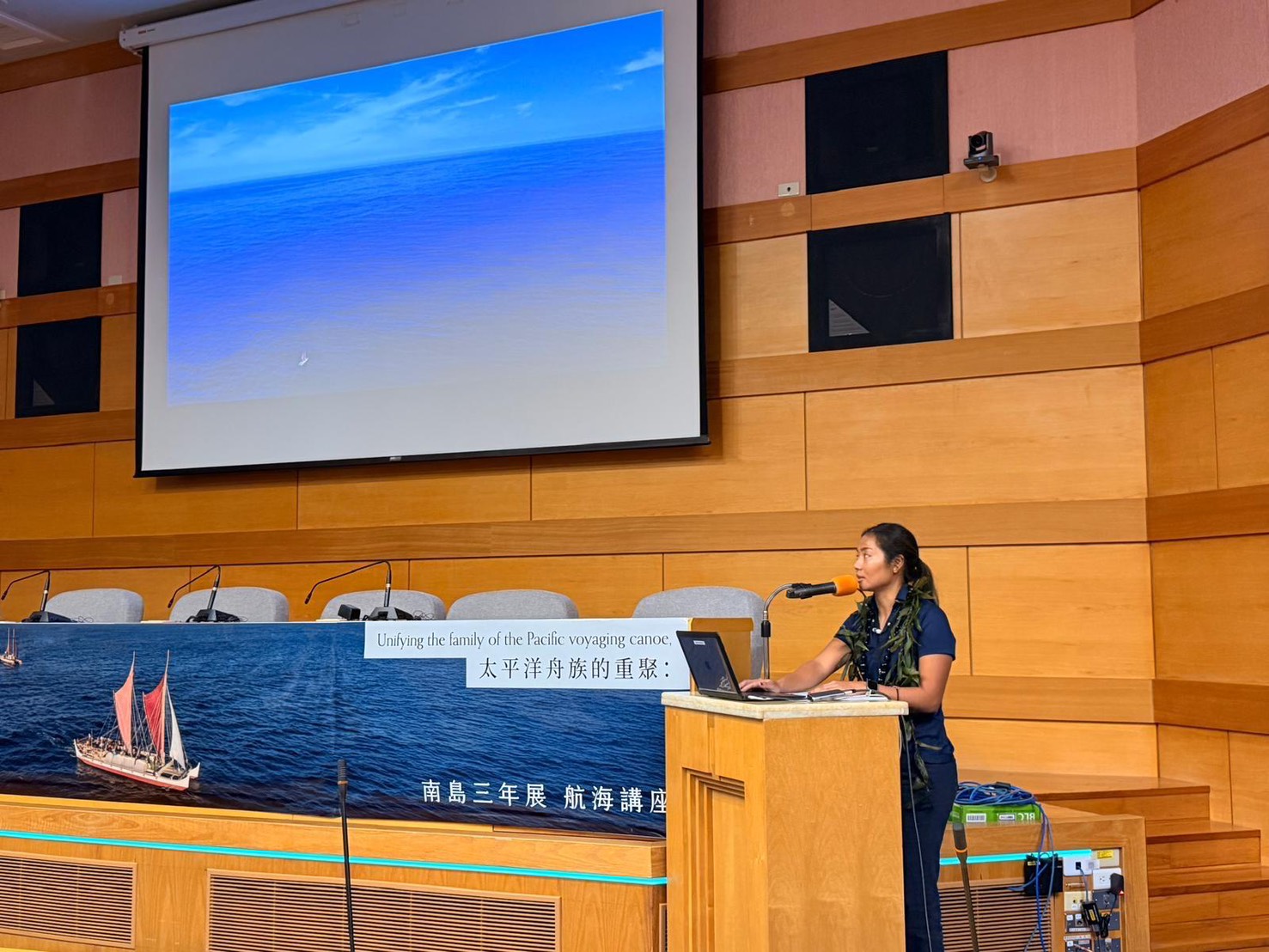
Navigating Moananuiākea in 2026: A Moment in Time


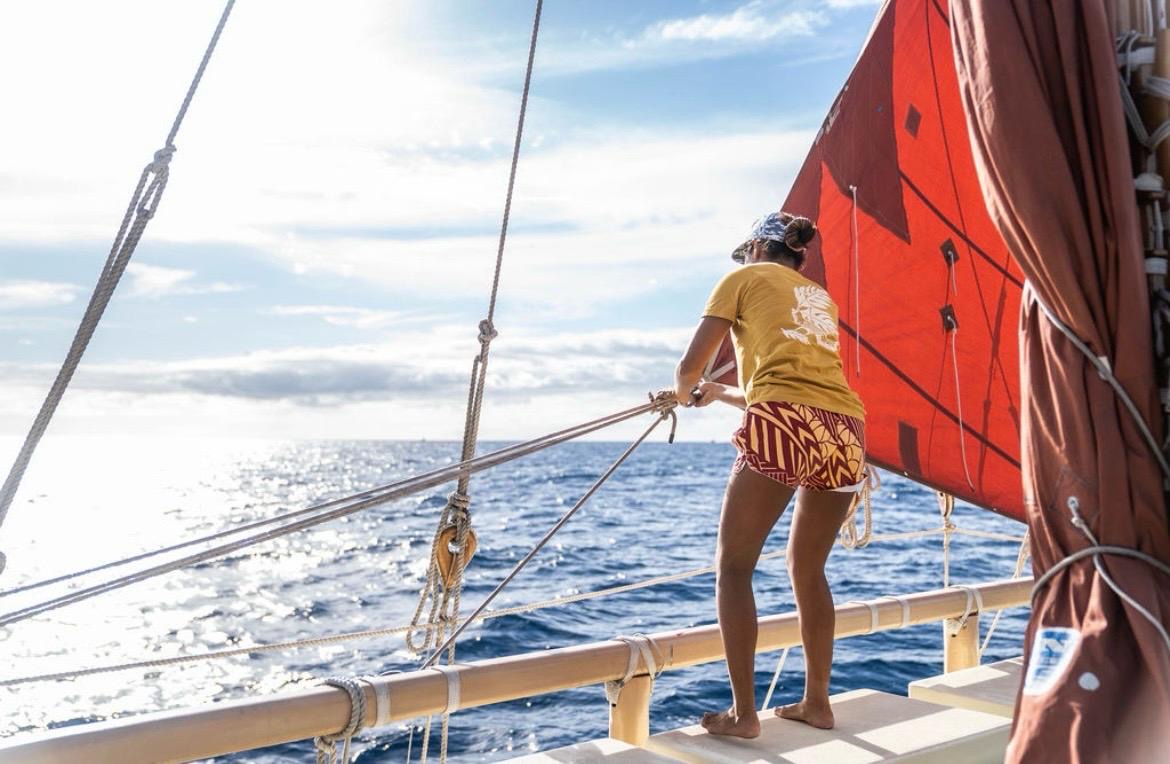
Navigation connects culture, science, and traditional wisdom. Integrating ancestral knowledge with modern STEM research allows us to honor our heritage while driving innovation.
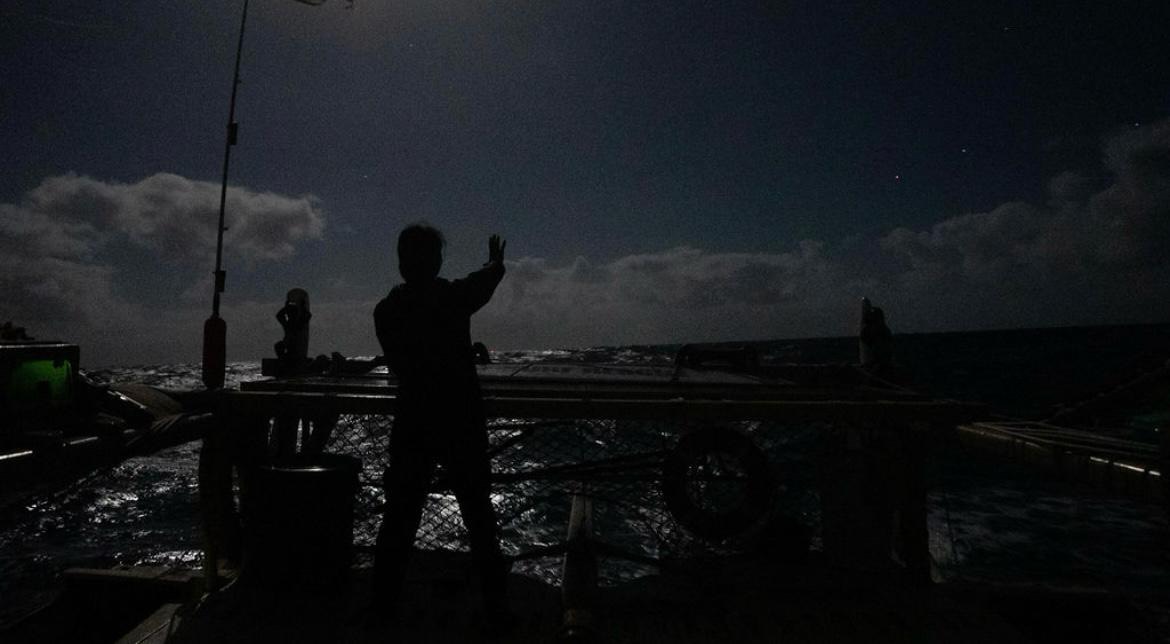
(Image source: Courtesy of the author | Fixing the sheet line out at sea.)
How do we navigate a quickly changing world with powerful oceans?
I come from a beautiful and powerful place: Hawaiʻi. Located 21° North of the equator in the middle of the Pacific Ocean. Like many islands and atolls in Moananuiākea (the vast Pacific), the ocean surrounds us. It would make sense that my ancestors come from great stories of wayfinding and navigation on waʻa kaulua - double-hulled voyaging canoes. They found Hawaiʻi on a voyage from Tahiti to Hawaiʻi along Kealaikahiki (pathway to Tahiti), utilizing no modern instruments. Prior to this voyage(s) the migrations from West to East across the South and Western Pacific reached its roots all the way back to Taiwan. While I come from Hawaiʻi and my canoe is from Hawaiʻi, the case of how powerful Moananuiākea is looks at this genealogy as our foundation. A genealogy that is interconnected and woven across water.
Today, voyaging canoes across Moananuiākea have reconnected with their ancestral ways of knowing. Great voyages are still happening by many island people, repaving these ancestral sea roads. The cultural connections through each voyage have continued our practices and opened up classrooms for students of voyaging and navigation like myself.
As a student of navigation, my kuleana is to learn, practice, and teach future generations about who we are and where we come from.
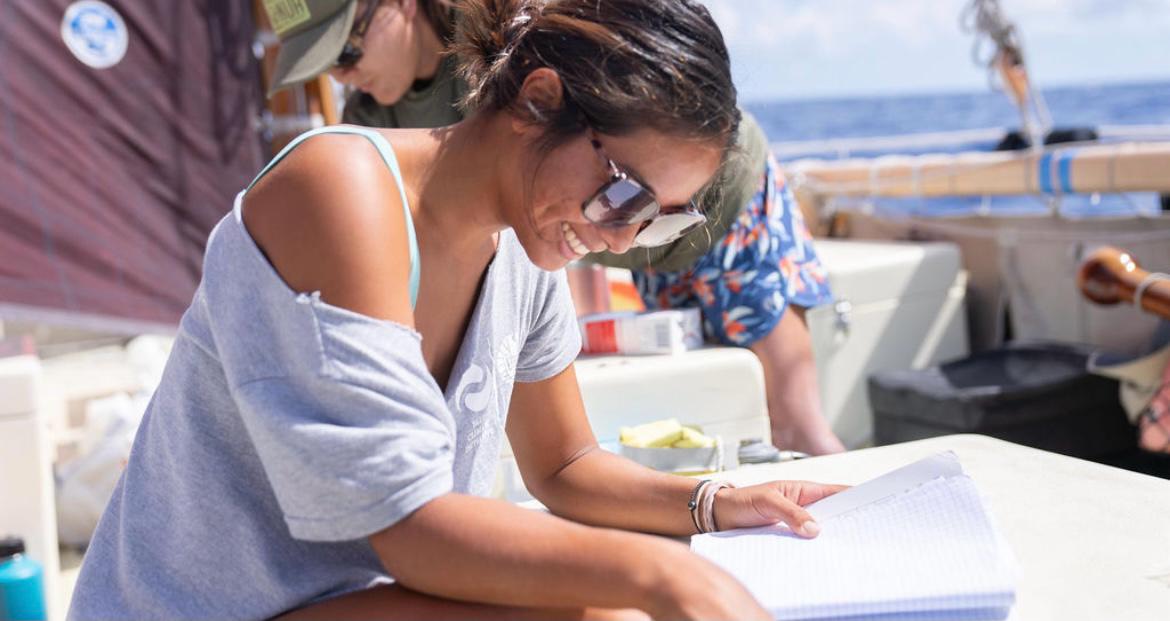
Introduction to Voyaging and the Ocean - A Moment in Time
My ancestors navigated without modern tools and instruments. They had the knowledge and sight of the ocean, deep connection to Earth systems, culture, community, and spirituality - allowing them to do great things. Today, we continue this practice by voyaging on waʻa kaulua while navigating with celestial bodies and products of the Earth; the sun, moon, and stars, the winds, the waves, the colors, the animals and more. However, at one time, navigation was almost lost in Hawaiʻi. In 1975, voyaging canoe Hōkūleʻa was launched with the goal of voyaging 2,400nm to Tahiti but there was no navigator. The reality was Hawaiʻi had lost its connection to our ancestral voyaging connection but were still determined to find it again.
It was Pwo Master Navigator Mau Piailug, from Satawal, Micronesia, who agreed to this endeavor. In 1976, he successfully pulled the island(s) of Tahiti out of the sea on Waʻa Hōkūleʻa. Then he taught my teachers.
I was introduced to the miracle of voyaging as a youngster growing up in Hawaiʻi through stories, books, films, and community. A very modern introduction so to speak. Hōkūleʻa and her crews had been finding islands for over 20 years when I was born. The legends of the canoe were incredible stories at this point. It came from their commitment to Hawaiian renaissance and persistence for greatness. It changed the world and our world here in the Pacific.
From this introduction, it always made sense that Hawaiians were doing great things, especially upon the ocean. I was completely unaware of the beginnings and their sacrifice for our opportunities as young kānaka. The fight and mission was to protect our cultural practices, our land, our water, and the health of our people. The young ignorance wears as we inherit the concerns of our parents’ and grandparents. They are also concerns of mine: ecological disasters, loss of biodiversity in our environment, lack of unity, and more. These concerns still exist and they ebb/flow with troughs of many places and people who are all experiencing the same thing. As we train to voyage and navigate, we are learning knowledge and practicing our culture that was passed through these generations and looking forward to a new chapter in time.
The main connection and responsibility I feel as a voyaging student is to the ocean and our islands. To voyagers and islanders, the Ocean is everything - to the communities who inhabit island atolls, islands, and continents in this vast ocean, it is our connection to something much deeper. Something that cannot truly be articulated in words. Pilina is our word for relationship in ʻōlelo Hawaiʻi and ʻohana is family. That is the ocean for many of us. It not only connects us but provides us with food and shelter - the fundamental parts of our culture. Included is a true love for our way of life and the methods of raising up our families ensuring that we can continue.
Voyaging shows us who we are at our core and what is important to work toward - our oceans are the canvas that we came from and must continue to protect.
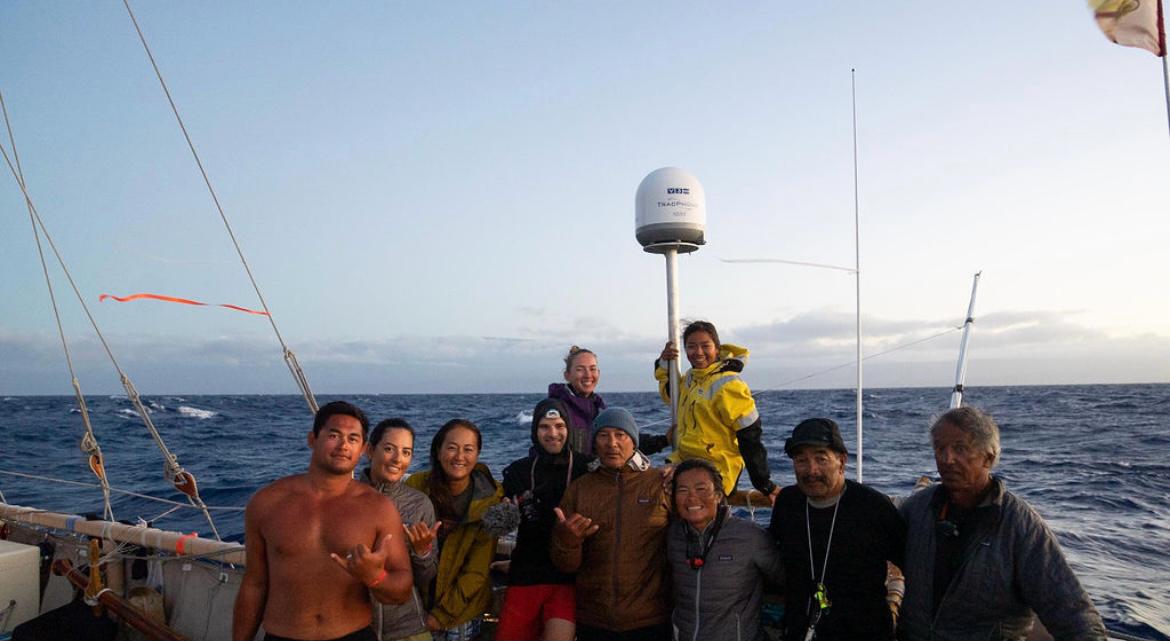
Navigation as a Focus - A Moment in Time
To be a young navigation student is a huge privilege with kuleana - responsibility to the future generations of voyagers. I love learning navigation because there is an intersection between culture, engineering and design, earth systems, math, science, and more. It truly is a growing academy of how we look and see the world as people of the ocean. We have our ancestors to thank for this worldview. I believe that the more we integrate, the more we can exist with our practices and innovate.
As a student, I have learned that navigation is an ever-changing practice that is teaching those to respect all and many ways of living and seeing the world. On the canoe, we are poised to rely on our training to keep a course. This includes accepting whatever weather is on its way toward you then trimming your sails and steering in response. This might be in the form of a storm, wind direction, swells, birds, current, and many circumstances you may not expect. It is physically and mentally demanding. I have watched my teachers go without sleep for days at a time and commit to focusing - they never back down from understanding their observations. They go through a process of understanding what may be going on past the horizon and they plan then decide on their connection. In my mind as a student, they are not looking for the “right answer” but trying to connect to their teachers and all of their experiences on the sea.
The practice relies on hard work and an acceptance of the challenge: that all of us are constantly learning and simply that we do not know everything. They show us how to focus and make good decisions when there are difficulties thrown at you. They rely best at sea by respecting what is in front of them and planning for a better vision in a minute, hour, or day's time. In the storm, in rough seas, in calm seas, they are constantly moving with situations.
Somewhere in the method is a larger lesson about who we are when we commit to the practices of our ancestors. It is the way navigation brings us closer to nature and the Earth then how we reflect back on our lived experiences. The larger lesson from navigation is how we shape our future and how we trim our sails to care for what we value - our values.
It represents a model for change - one that honors our resources, our people, and our oceans. It has touched many already: In 2017, Hōkūleʻa came home after a voyage around the globe named Mālama Hōnua - To care for the Earth. New voyaging canoes have been launched since 1976, schools across Moananuiākea, streams opened, loʻi kalo (taro patches) protected, and much more. The value of these experiences ripples across oceans because it shines the light on what is important and how to focus our minds, work, and energy toward something important.
Navigating Powerful Oceans - A Moment in Time
In 2026, we all have an important job to do and it is becoming more and more apparent. Our oceans are changing, and we know enough to know. We know the ocean is vital to our family. So at this moment in time, we are all challenged with how to navigate an immensely powerful ocean.
The storms we are taught to observe, from our waʻa, are showing us how the Earth releases heat. It is teaching us to plan our voyages around abnormalities, anomalies, and a changing - powerful ocean. It is teaching us to watch and learn about what our role is on the canoe and what to do when we return to land.This same perspective and intentionality must be integrated into our problem solving of current issues in our communities and around the globe. Our resources are quickly depleting and people are suffering. Outside global influences are threatening Pacific, sustainable ways of living. Our practices of voyaging help us to focus on what really matters - protection of where we come from and who we are.
The Austronesian and Pacific-wide, global-connection has been an important part of our identity as Pacific people in a shifting world because it anchors us to something greater than boundaries or battles. As I have written before, from voyaging, I have met many amazing people and leaders across Moananuiākea, who too have a deep connection of ocean, culture, people, nature and the strings that pull us together.In the end, voyaging, navigation, and our oceans unites all around a common cause - to protect our places that include our oceans and the connection that keeps us.
E Mālama Pono